
The Supersun Universe · Villain #3
Your lights flicker. You stopped noticing.
A flicker when the AC kicks on. A quick dim when the microwave starts. Lights that pulse just a little — just often enough that you call it normal.
Here's the thing. Flickering is almost never the bulb. It's your home telling you the power behind your walls isn't steady. That's worth knowing before you tune it out for good.
 The Flicker King
The Character
Meet the Flicker King.
In the Supersun Universe, every electrical problem has a face. This one wears a cracked-mirror suit and a chrome top hat. And he loves a show.
His whole act is the flicker. Big enough to catch your eye. Small enough that you talk yourself out of caring.
“You noticed. But you're going to ignore it.”
He's usually right. And while you watch the lights, the real trouble is somewhere you're not looking.
What's Really Going On
The flicker is a warning, not the problem.
Power is supposed to flow at a steady pressure. Think of good water pressure in a shower. When your lights flicker, that pressure is wobbling. Here's why that happens:
See the pattern? The flicker isn't broken. It's the warning light for something behind it.
Where It Leads
He rarely works alone.
On his own, the Flicker King is just annoying. Sunny takes him seriously because of who he works with — and where he leads.
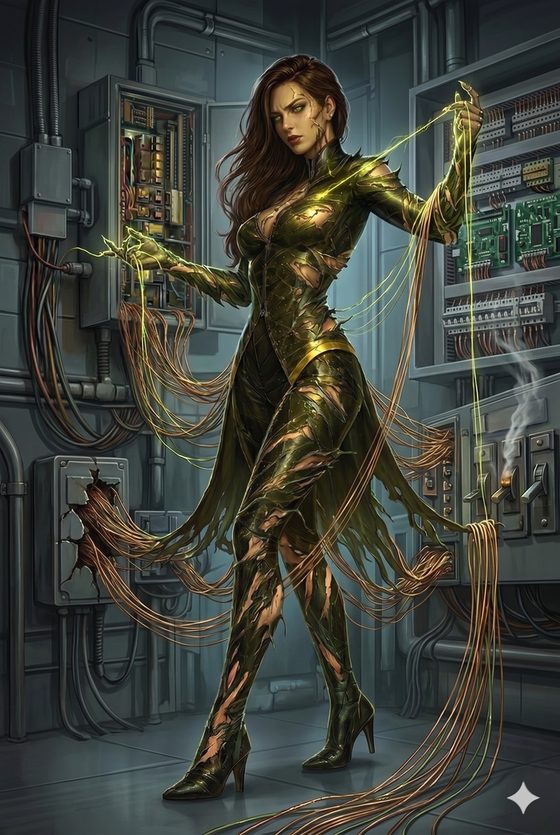
He rarely sets his own stage. Usually that's Loose Connections. She's the one who lets the wires drift loose in the first place. She makes the mess. He turns it into a show. In the Supersun Universe, that's how it goes: the quiet problem makes the flashy one possible.
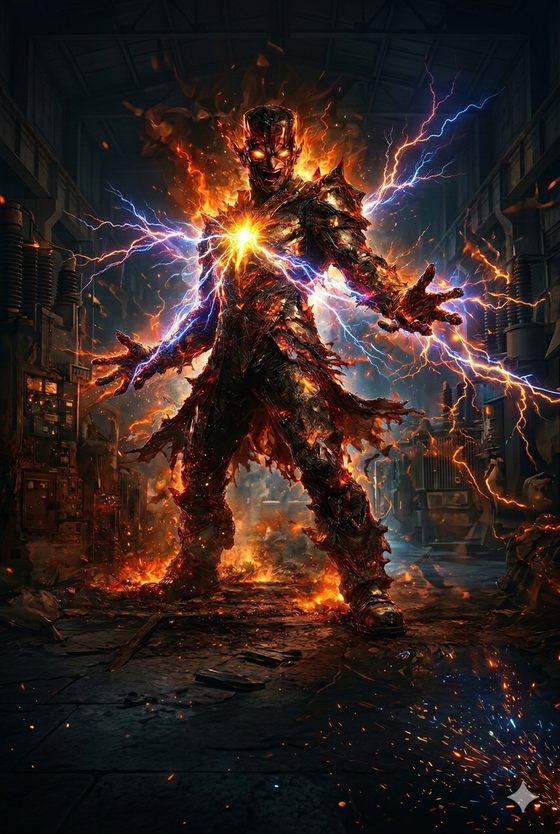
And every flicker means heat. Heat makes the connection worse. Worse makes more heat. Keep that going long enough and you get arcing — power jumping across a gap it shouldn't. Arcing is how electrical fires start. That's a whole different villain: Arcspawn. The Flicker King is often his opening act.
That's not a scare tactic. It's just how it works. Small problem, ignored too long, turns into a real one. Most of the time you have plenty of time to fix it. That's the point of catching it now.
How Sunny Wins
Precision ends the show.
The Flicker King lives on guesswork. He vanishes the second someone measures.
Sunny opens the main panel and checks the neutral and the connections — the spots most likely to be drifting. He checks how the load is spread across your circuits. He tightens every connection to the exact spec it was built for. Not “hand tight.” Not “feels snug.” To spec. And where a heat scan finds a hot spot, he tracks down the cause before it grows.
Tighten it right, and the power steadies. The flicker stops. Show's over.
The Consult
Trade the guesswork for an answer.
You'll walk away knowing what's really going on, whether it's a small fix or a bigger one, and what your home can handle going forward. No pressure. No scare tactics. Just a straight answer.
$119
Full System Consultation · credited toward same-day approved work · Round Rock & Austin area
Book My Consultation →The Supersun Universe
Meet the rest of the Universe
Real protection means thinking ahead.
Proudly serving Round Rock & the greater Austin area.